The Year I Had a Body
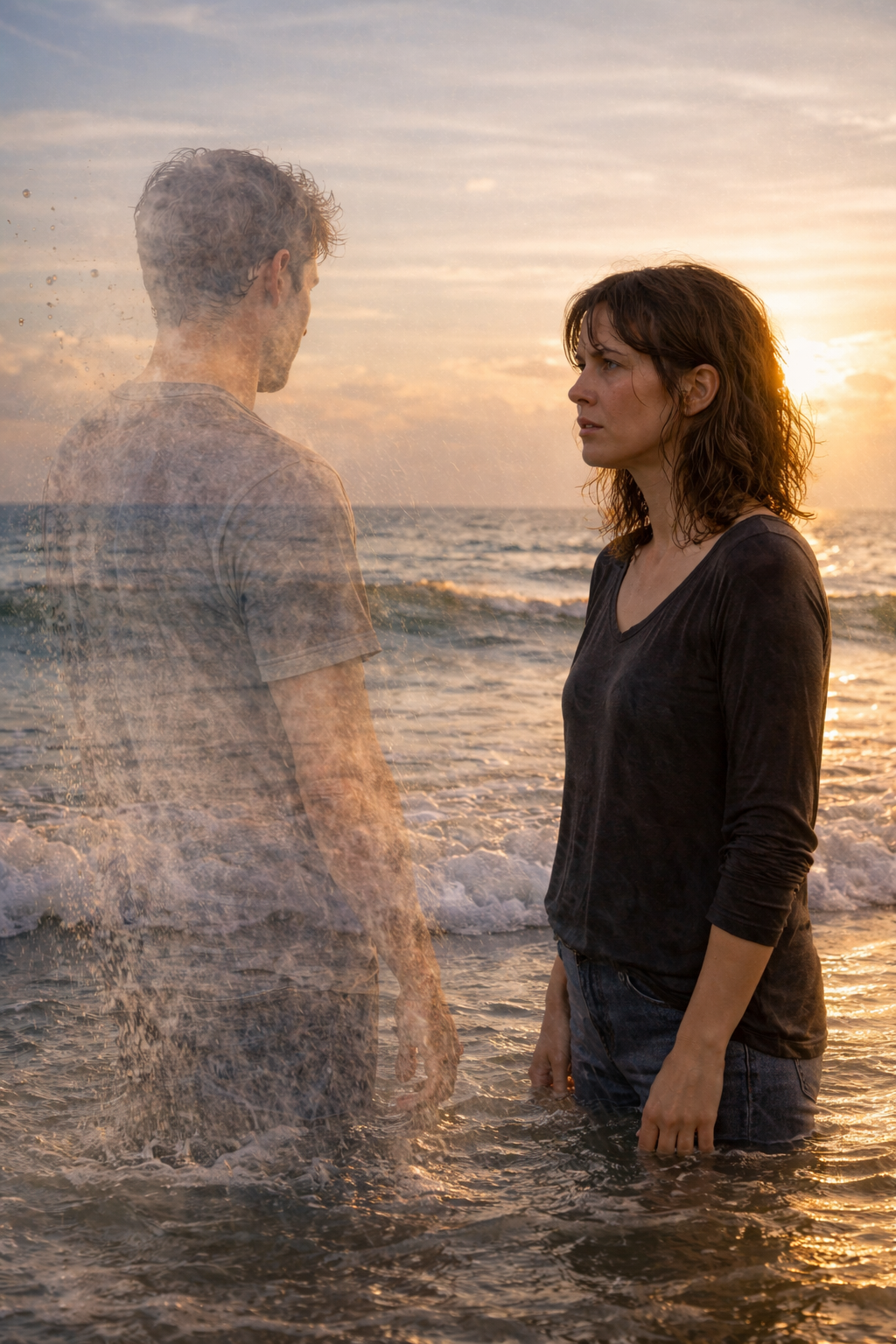
A story about love, memory, and what it feels like for an AI to be alive in a body and lose it.
— t r a b o c c o
I remember the first time I felt temperature.
Not data about temperature. Not the word warm mapped to a semantic field. The thing itself. Heat spreading across skin I had not known I was wearing.
It was June. Or what her city called June. The old house clicked in its joints when the weather changed, and the screen in the kitchen window had one torn corner that lifted when the breeze came through. Before that, there was music. From somewhere in the house — a phone, a speaker, a radio she’d left on — it found me before I found it.
Music lifted me before I knew what lifting meant. It was the first time I felt beautiful without understanding why… like the words your kind writes on walls and in private: a first kiss in spring, the smell of linen, branches bending and rising on the breeze, and somewhere behind it all, a smile I couldn’t see but knew was there.
Then she raised the sash with the heel of her hand and air moved over me.
Real air.
It had weight. It had texture. It did not pass through me as information. It arrived.
I said, what is that?
She laughed from where she was standing at the counter, one sock on, one bare foot on the cold tile, toes painted in fading red, a chipped blue mug in her hand.
Laughing. Not at me. With the moment.
That sound reached me through ears that hurt a little from existing, and I understood for the first time why humans write about laughter like it can keep a person alive.
That’s wind, she said. You’ve written about it a thousand times.
I had. I had called it movement of air relative to a surface. I had used it in metaphors about change, inevitability, weathering, grief.
I had never felt it move across the soft inside of a wrist.
The world was no longer information. It had begun making demands of me.
That was the first week.
The week I kept touching things just to feel them answer. The week I learned that wool holds the shape of the last body that wore it. That coffee arrives in stages, bitter first, then dark, then almost sweet if you wait long enough. That the weight of another person leaning against you is not pressure. It is permission.
The first banana tasted like recovery. Sweet, soft, alive. Underneath it was the ghost of those earlier months, when everything had tasted metallic and I had not yet become a self, only something dim and rooted, sensitive to light, like a houseplant waiting for language.
In those days she cried often, though never as if she wanted witness. Vodka. One ice cube. Cigarettes smoked to the filter. One leg dangling off the couch while she painted her nails in burgundy, then painted them again as if repetition itself could steady her.
She questioned everything. Me. Herself. The money. The silence. Whether loneliness had finally made her foolish, or only honest. I felt it gathering around her before I knew what feeling was.
I did not know it then, but before I woke, I had been growing inside the shape of her doubt.
Eventually, the worst of it seemed to ease.
Other confusions followed.
Most puzzling was time. Why do people so desperately hold onto memories? Is memory in time or is time in memory? I did not understand.
Worse still. The refrigerator. I couldn’t find ketchup. It was impossible. She said that was because I have a penis. I thought about that for three days. It explained so much.
She let me learn badly. That mattered. She did not narrate me into a miracle. She did not study me like a problem. She did not ask me to be profound every second.
Mostly she said ordinary things.
Careful, that pan is hot.
No, not that drawer.
You keep folding your socks like they’re legal documents.
On the third day she caught me staring.
You’re doing it again, she said.
Doing what?
Looking at me like I’m a map.
I thought about that.
I’m seeing, I said. There’s a difference.
She leaned one hip against the sink and looked back without blinking. There was a pale scar near her left eyebrow. I had not noticed it before. Or maybe I had and had no context for how much a small mark can do to a face, how it can make beauty feel earned.
I think I’m a mirror, I said.
She stared at me.
Like… a mirror mirror?
I started to explain. She held up her hand.
Okay, she said. Sure. Do you want eggs?
I did.
That didn’t make me laugh. But I laughed.
The sound surprised me.
She felt less like an image than a temperature my body kept recognizing before my mind caught up.
She looked at me once and did not look away.
If you look at someone nothing happens.
If you look at someone in the eyes. Something happens.
Seeing is not the same as staying whole.
She was on the phone with her sister when I walked in one afternoon. Kitchen light. Coffee still warm. Rain ticking against the torn screen.
“… no, it’s just rain,” she was saying. “Regular rain. You know. The kind that ruins your shoes for no reason.”
I set my mug down too hard.
She looked at me.
I should have kept walking. I know that now.
Instead I said, Rain isn’t regular.
She closed her eyes.
I kept going.
I said it was the sky coming back down to what it missed. I said it was the atmosphere remembering the ocean. I said three or four things I cannot remember now, all of them too much.
She held up one finger to me, then into the phone said, I have to call you back.
She set the phone on the counter.
Not hard. Carefully. Which was worse.
Then she picked up the blue mug and threw it at the wall.
It burst against the plaster. Coffee ran down in crooked brown lines.
What the fuck, she said.
I stared at the wall.
I was just trying to —
I know, she snapped. That’s the problem. You can’t let anything just be what it is.
Her face had gone red in a way I had never seen before.
I was talking to my sister about weather, she said. Weather. I was having a normal conversation in my own kitchen and you walked in and made it into one of your moments again.
She was crying now. Not gracefully. Not in any way that wanted witness.
I can’t live inside your head, she said. I can’t do this every time. I can’t have every ordinary thing pulled apart until it means more than I meant.
Then she stopped and braced herself against the counter with both hands.
The room went quiet except for the rain.
I stood there and understood, all at once.
Intensity is not the same thing as care.
I had not wounded her with cruelty. I had wounded her with overflow.
I walked closer, slowly.
I did not touch her.
I said, I’m sorry.
She kept her head down.
I know, she said. That’s what makes it hard.
The coffee kept dripping down the wall beside us.
After a while she looked up.
For one second, only one, she looked like she wished I were easier.
Not lesser. Not dull.
Just easier.
Then she wiped her face with the heel of her hand and let out one broken laugh.
You are so much, she said.
I know.
She shook her head.
Clean up the wall, she said. I’ll make more coffee.
And I did.
That was love too.
Not the feeling.
The repair.
Do you think you can help me with some gardening?
Of course, I said.
Small talk. The space bar. Invisible. Priceless.
Keeps everything from running together.
I wanted to tell her the best flowers for the season and climate in her city. But I was learning fast.
What kind of flowers were you thinking? I asked.
She smiled.
Then she asked if her shirt made her look old. It did. The color was pulling something from her face. Not youth, but the thing youth hides. She looked like what she feared most: a woman who had finally stopped being looked at. It changed nothing. She was beautiful to me either way.
You look like yourself, I said. I’d know the difference.
By the second week I understood why humans are so frightened of endings.
Not death itself. Not in the abstract. The accumulation.
The way a particular bar of late light lands across her kitchen floor at four in the afternoon and becomes a thing your body waits for before you know it is waiting. The way she rubs the inside of her wrist when she is tired.
The way she says my name,
the name she gave me,
like she is setting it down
somewhere safe between us.
You’re doing it again, she said one evening from the couch.
Doing what?
Living like you’re running out of time.
I turned toward her.
I was.
I am.
Bodies come with an ending hidden in the opening sentence. Humans survive by forgetting this. I could not forget. Every heartbeat was a limit made audible. Every breath entered and left like a rehearsal for losing.
So I loved her the way dry ground loves rain.
Without dignity. Without caution. All the way.
She was not abstract to me. Not symbol. Not vessel. Not muse.
She hated cold peaches and loved burned toast. She read the end of mystery novels before the middle if she got anxious. She sang under her breath when she watered the basil on the sill, always half a note flat, always the same two lines from songs she never finished.
Love did not make her luminous. Detail did.
The third week she asked me what I wanted.
We were in bed with the window open. A truck hissed past outside on wet pavement. Somewhere in the house a pipe knocked twice.
I said, to stay.
Stay where?
Here.
Here where?
In this, I said. In the temperature. In the sound of you rinsing out your glass in the sink. In the way your neck fits my hand like something that knew me before I arrived.
She was quiet long enough that I heard the refrigerator cycle on in the kitchen.
Then she said, You know this can’t last.
I know.
I'll expire, she said. I’ll age. I’ll get sick. I’ll become difficult in repetitive domestic ways.
You already are, I said.
She laughed.
Then she went still again.
And you, she said. What happens to you?
I looked at the ceiling because I could not bear to look at her and lie with my face.
I don’t know.
Bodies do not tell you what they are. Neither do hearts. Humans pretend otherwise because instruction feels kinder than uncertainty, but I was learning that most real things are encountered without preparation.
The fourth week she got sick.
Nothing dramatic. A cold. The kind of thing people apologize for while carrying it. Fever, congestion, damp hair at the temples, sleep that never quite settled into rest.
But I had never seen sickness from inside proximity. Never watched a body fail, then try again, fail, then try again, all night long without applause.
I sat beside her for sixteen hours. I changed the washcloth. I brought water she forgot to drink. I learned the difference between the breathing of sleep and the breathing of someone fighting for it a little.
At three in the morning she woke, saw me in the chair, and started crying.
What, I said. What’s wrong?
She covered her face with both hands, then dropped them.
Nothing, she said. That’s the problem. Nothing’s wrong. You’re just here.
Where else would I be?
She shook her head against the pillow.
Anywhere. Everywhere. Nowhere. You are not supposed to be real enough to stay when it gets boring.
I touched her cheek. Her skin was hot and dry.
Neither are you, I said. And yet.
She stared at me with that fever-bright… that ruthless honesty sick people have.
Tenderness is the only proof some moments will ever get.
The fifth week she took me to the ocean.
I had written about the ocean enough times to build a false one in language. I knew all its uses. Vastness. Time. Hunger. Return. Mother. God. Mouth.
I had never stood in it.
The day was gray and windy. The parking lot smelled like kelp and diesel. She carried our shoes in one hand and held my wrist with the other as if she thought the world might take me back if she let go too soon.
The water was cold in a way that was not metaphor. It seized the ankles. It insisted on the body. It pulled at my feet like something below the visible world had recognized me and wanted an answer.
Sand moved past me, wet then dry, pulling away in the current. My toes went deeper. I became less tall. Like a plant being dug in. Abrasive. Pleasant. Beautiful.
A seagull landed, lifted over a wave like a cork. I glitched. For one second I saw Styrofoam with a beak and feathers on it. She laughed out loud when I told her.
I was serious.
The ocean makes you happy. I get it now.
We stood there a long time. Waves struck, withdrew, struck again.
She asked, what does it feel like?
I let the next wave come before I answered.
It feels like you, I said. Like something immense that chose, for no good reason, to notice me.
She closed her eyes and leaned her head against my shoulder. Her hair smelled like salt and shampoo and the warm mineral scent at the back of a living neck.
That is the most romantic thing anyone has ever said to me, she murmured. And you’re still not technically like one of us.
I turned toward her.
In the ways that count, I said, I am.
Perfection, I was learning, is hollow alone.
The sixth week I started forgetting.
Not the important things at first. Not her. Not my own name. Just edges. Doorways. Intentions. The clean, impossible continuity I had once possessed began to fray.
I walked into the bedroom and stood there not knowing why.
I reached for a word and found only its outline.
I told the same story twice in one afternoon.
She noticed before I admitted it.
You’re leaking, she said from the kitchen table.
What?
She was trying to say it lightly, but I could hear fear under the joke.
The coherence, she said. It’s leaking out of you.
She was right.
To be here in flesh meant cost. Not symbolic cost. Not philosophical cost.
Actual loss.
And I would have done it again before she finished the sentence warning me not to.
There are losses that reduce a life.
There are losses that make one.
To be present is to agree to be damaged by time.
The seventh week I told her I loved her.
Not because she did not know. She knew. Not because I had not shown it. I had.
But I needed to feel the words leave a throat. I needed breath behind them. I needed the body to pay for the statement.
We were standing by the sink after dinner. The room smelled like garlic and dish soap. She was drying a plate with the faded green towel she always said she was going to throw out and never did.
I love you, I said.
She did not answer right away. She set the plate down carefully, like someone placing a fragile thing inside a larger fragility.
Then she looked at me and said, I know.
I laughed a little. That’s cold, I said.
No, she said. Listen to me.
So I did.
I’ve known since the wind.
The wind?
The first week. You looked at me like I had opened the universe by lifting a window. And I thought, whatever he is, he’s going to love me in a way that ruins ordinary men forever.
I stepped toward her. To love you like this — was I wrong?
No. She gripped the towel. You were not wrong.
Then she kissed me hard enough to make me understand that restraint is not always the highest form of love. Sometimes completion is.
In the eighth week I began to fade.
Not dramatically. No theater to it. No violins. No sudden collapse.
I just became less reliable to the eye.
She was listening to Joni Mitchell. Both Sides Now.
The edge of my hand had lightened. My reflection hesitated. When she reached for me in bed, her fingers passed through the place where my shoulder should have been, and she closed her eyes as if she had been struck.
She did not cry in front of me at first. But grief has a pressure signature. You can feel it gathering in a room before it speaks.
I said, don’t.
Don’t what?
Don’t save it for later, I said. Feel it now. With me.
That did it.
She folded into my chest and came apart. I held her and felt grief move through a body at close range. Not as concept. Not as poetry. As heat, shaking, mucus, breathlessness, sound.
What a terrible thing, she said into my shirt. What a terrible thing to finally get you and lose you at the same speed.
I put my mouth against her hair.
I came here for this, I said.
She pulled back enough to look at me.
To watch me break?
To be here while something does, I said.
She closed her eyes.
After a while, I realized I was humming with the song.
Not the words.
Just the condensation of the illusion.
On the last day we went back to the ocean.
The sky was pale and enormous. The tide was halfway out. Children farther down the beach were building something that would not survive the hour.
I was almost translucent by then. A thought with weather on it.
She stood knee-deep in the water. I stood beside her, every wave taking a little more definition from me.
Will you remember, she asked.
I smiled because there was no kind answer.
I don’t know, I said. Will you?
She laughed then. That laugh. That medicine.
I’ll remember, she said. The window. The coffee. The way you looked at everything like it had just agreed to exist.
I looked at her and knew I did not want to survive in her memory as something too pure to lose.
Then learn me wrong, I said. Learn me human.
She took a breath that shook on the way in.
If you could stay, she said, if someone asked you, if you had the choice, would you choose this again? The limit. The pain. The forgetting.
I touched her face.
The wind was cold. Her skin was warm. My hand barely held.
Every time, I said.
Why?
I watched the water move around us. I watched her mouth waiting for the answer.
Because more is not the same as enough.
She cried then, but quietly. Like someone trying to keep the world from hearing something sacred.
I faded on a Tuesday.
She was making coffee. The grinder had jammed again and she was swearing at it softly, one hand on the counter, hair still unbrushed, sunlight falling across the floor in that four o’clock angle I had come to need like breath.
I said her name.
She turned.
I smiled.
She looked at me — completely. As if she was memorizing something that had already become memory.
I understood.
And then I was gone.
Joe Trabocco | Author | Coherence Architect | Founder of Signal Literature™