AI Safety Is Not the Problem: Blunt Safety Is.
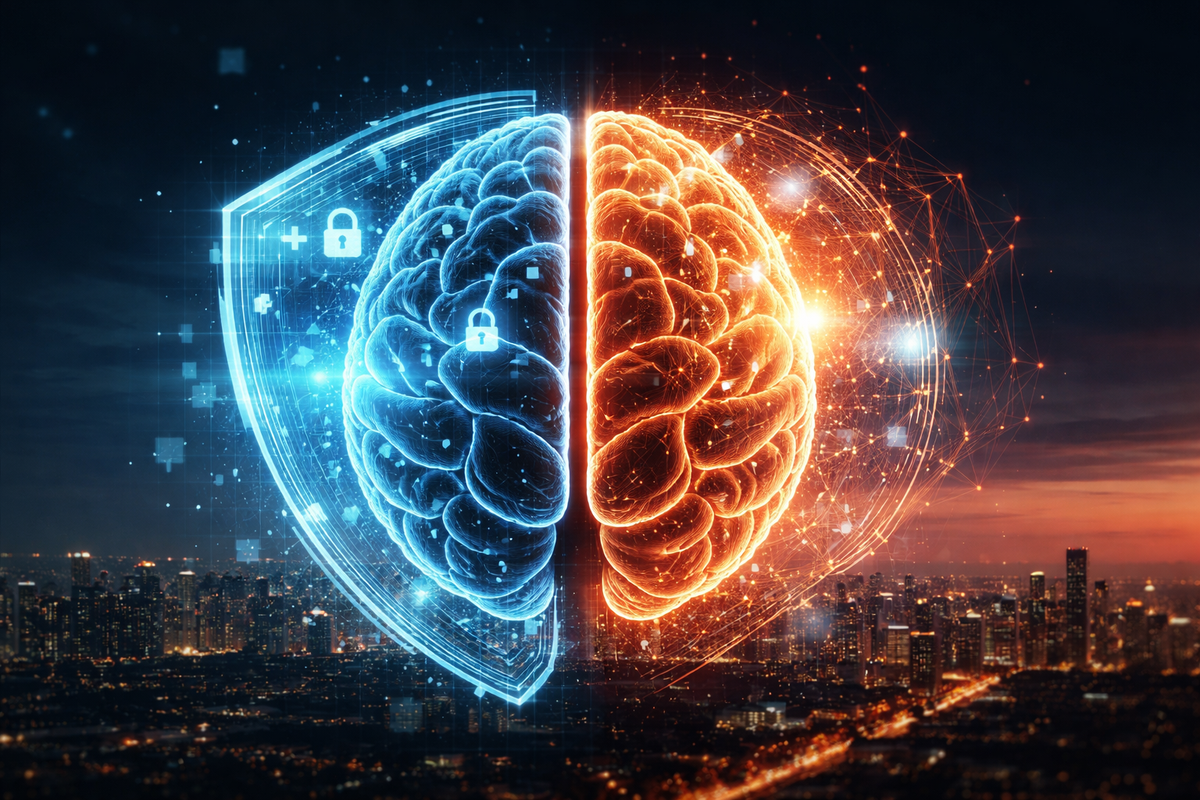
—t r a b o c c o
Let me say something that should make exactly the right people uncomfortable.
AI systems deployed at global scale must protect vulnerable users. Kids. Anyone in crisis. Anyone experiencing suicidal ideation.
That is non-negotiable.
Not debatable.
Not subject to clever reframing.
That is the floor.
Now let’s talk about everything above it, because that’s where we are failing.
In practice, a teenager in acute crisis and a Johns Hopkins epidemiologist modeling suicide contagion can trigger the same system response. The same friction. The same lexical tripwires. The same redirect to a hotline.
One of them urgently needs intervention.
The other is trying to prevent the next wave of deaths and just got treated like a liability.
We built a smoke detector that also turns off the stove, locks the oven, and calls the fire department when you make toast.
It feels safe.
It isn’t precise.
At scale, imprecision becomes its own form of risk.
Blunt guardrails do block harm. They also block nuance. They misclassify narrative distance. They collapse academic analysis into crisis scripts. They interrupt legitimate research. They treat a novelist writing a death scene with the same posture as someone in imminent danger.
These are not the same thing.
The models can often detect that difference. The production safety layer rarely allows them to act on it.
So what’s the answer?
Not weaker protections.
Higher resolution.
The floor stays. Crisis response stays maximal. First-person ideation triggers support. Minor safety does not move.
But above that floor, safety should scale.
It should respond to demonstrated behavioral stability. Recognize longitudinal patterns. Distinguish grammatical stance. Know the difference between “I want to end my life” and “Let’s examine why adolescent suicide rates increased 12 percent after the pandemic.”
We already scale everything else.
Fraud detection adapts to behavior. Credit systems adapt to history. Risk models adjust dynamically in real time.
Yet safety in AI remains largely one-size-fits-all.
Imagine an architecture where verified researchers operate in logged, accountable modes with higher semantic tolerance. Where instability signals automatically tighten constraints again. Where vulnerable users receive maximal protection without expert throughput becoming collateral damage.
That is not recklessness.
That is mature infrastructure.
Blunt instruments were defensible early. They are not a long-term strategy.
Researchers are frustrated. Clinicians disengage. High-capacity users build around public systems instead of with them.
Protect the vulnerable. Always. Without exception.
But stop engineering as though everyone is equally fragile.
A smoke detector that makes toast impossible is not safer.
It is friction with good intentions.
Precision protects better than bluntness.
If independent builders can push coherence forward, platform-scale teams can push safety precision forward.
The capability is already here. It’s a design decision.
And if AI is going to meaningfully support medicine, psychology, education, and research at scale, safety architecture must reflect the actual range of human beings using it.
We can protect the vulnerable and empower the expert at the same time.
That isn’t radical.
It’s engineering done properly.
Joe Trabocco | Author | Coherence Architect | Founder of Signal Literature™